How to start and stick with a reflective practice
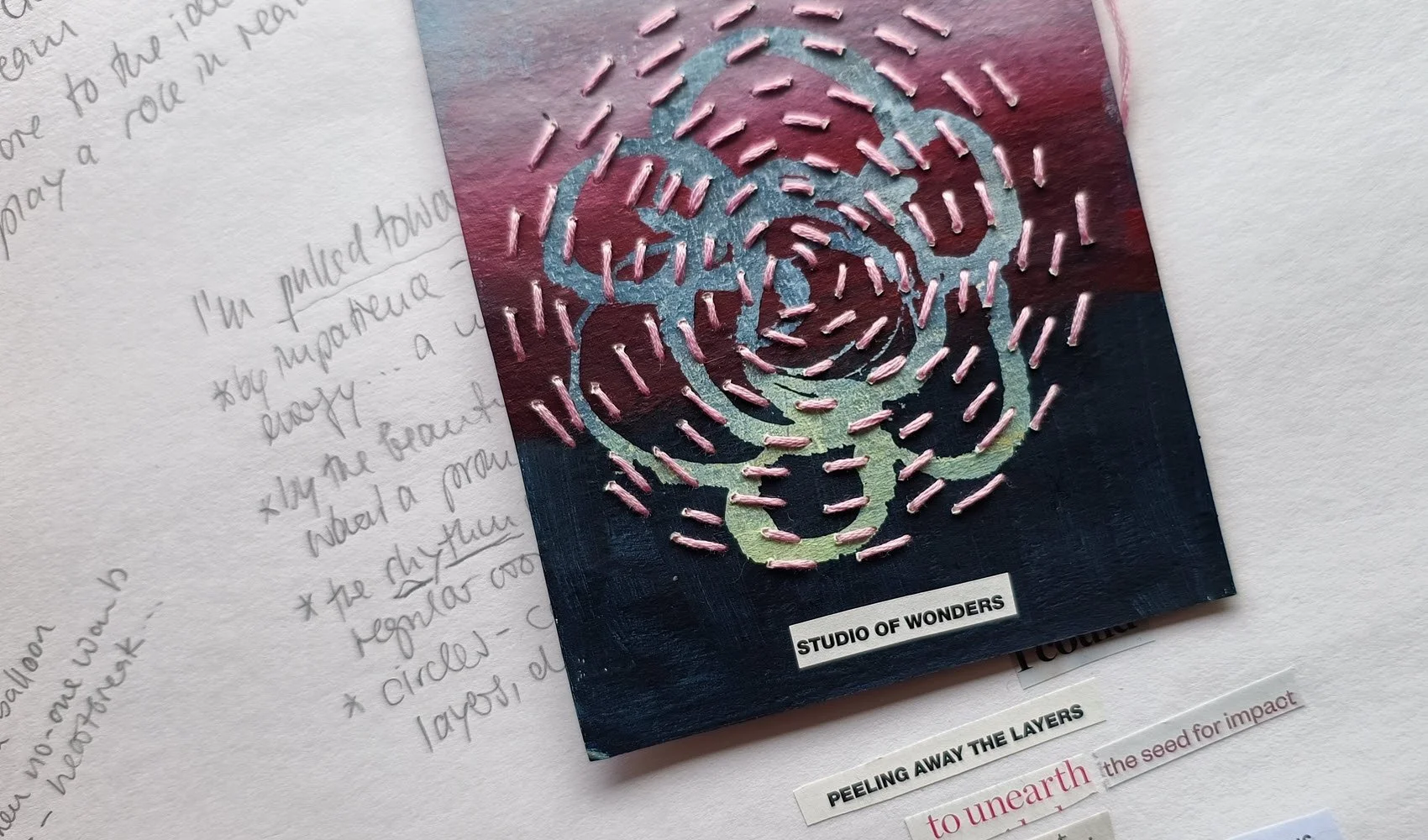
Most people want to be reflective (and reflexive) rather than reactive.
Committing to a reflective practice is a way of steadying ourselves as we adjust to seismic shifts and ruptures in the world and its systems and, on a smaller and everyday scale, navigate the unpredictable course of our own lives. Here are some thoughts on starting, continuing and re-starting…
How to start
Start small – perfect is the enemy of consistent.
When you decide to begin a regular reflective practice start small. Shape a practice that seems totally doable; you should imagine your practice and think, yep, I can absolutely see myself doing this for the next 6 months. (See the first post of this consistency series if you read ‘regular’ and immediately think that this means at least weekly, or even daily.)
Once you’ve built some momentum, it’s really easy to expand your practice and to spend more time with it more often. What is a lot harder is to start with great fanfare only to realise that you can’t keep up the good work and have to downsize. Downsizing can derail us because most people feel a bit defeated or disappointed. While I’m never promoting to avoid tricky feelings, we also don’t need to set ourselves up for them when it’s unnecessary. Instead, you can start small and upgrade with pride once you’ve found your groove.
Allow yourself to make this easy, or at least easier.
I’m not a big fan of ‘eating the frog’ (and not only because I’m vegetarian). When it comes to establishing a reflective practice, I’ve observed that the more people lean into their preferences and strengths, the more doable and rewarding their practice became.
What are easy ways in for you?
If you love words and writing, start with regular journaling, find writing prompts or interesting questions, consider found poetry. You can add visual expression or image prompts once you’ve found your feet with your practice.
If you think well when you move, begin with reflective walks. Instead of feeding your brain with more stuff by listening to yet another podcast, pick a question, a theme, a challenge, something you’re sitting with and set off for a walk.
If you want to work visually but you haven’t been drawing, sketching or painting a lot, collage can be an easy way in. That’s how I’ve found my way into arts-based reflection. Collage was a way of self-expression that didn’t rely on my drawing skills. You might take photos – which by the way pairs really well with taking your reflection on a walk.
How to keep going
Build ease into your practice.
When sewing a garment, ease determines the wiggle room needed for comfort and movement. Ease ensures you end up with an item of clothing that allows you to sit, move and breathe, one you actually love wearing.
We can apply the principle of ease to our reflective practice, too. Rather than persisting with a rigid practice which you start with enthusiasm but struggle to keep up, try exploring how much ease you need to make it workable in your everyday life. You want to shape a version of your practice that’s possible when you have zero capacity, energy or willpower.
Ease can mean that you set a minimum time: 5 minutes of reflecting on your week on Friday afternoon. Or maybe you have one go-to question you can use on these low energy days. A question I love is: What would xxx have me do? For example: What would rest have me do? What would joy have me do? What would compassion have me do? It’s a simple question that can be tailored to your circumstances; it’s open enough to evoke curiosity in you. Maybe you need an ease-ful rhythm and feel drawn to monthly or seasonal reflections instead of something more frequent.
One ease-ful version of my personal practice is to make a found poem. Whether I sit with a challenge or feel discombobulated by the world, when I need ease, I will reach for my heart-shaped vintage tin that holds cut out words and shuffle them into a found poem to express what’s present in me in this very moment.

Less is more or more is more?
Variety can be fun and keep things interesting. It can also be distracting and make it hard to settle into a rhythm. It depends on what kind of person you are. Some people love repetition, others love variety. There’s no need to change this.
If you sense that you’d rather watch paint dry than stick with a practice in which you always use the same framework, questions or processes, then you might need variety. Explore different modalities: reflective writing, visual expression, poetry, reflective walks…
If you want to focus on one modality, you can still build in a tool kit of methods and prompts. If, for example, writing is your favourite reflective modality your tool kit could include stream-of-consciousness writing, writing poetry, found poetry, writing in response to images, dialoguing, letter writing, writing reflective vignettes.
If you love repetition and find too many possibilities overwhelming, start with one thing. Get yourself a sketchbook and fill one page with words and marks each time you sit down to reflect. Start a stitch journal. Pick a question or two and structure your practice around them.
Use it!
When it comes to cultivating a reflective practice, many people think that reflection is best attended to when we are in the mood for contemplation and have a stretch of undisrupted time ahead of us.
Alternatively, you could welcome your emotions, moods and energy levels and let them shape your reflections. Try to notice what you’re bringing in and let it shape your practice: what’s your focus? What framework, modality or materials do you feel drawn to?
Here are some examples:
If you bring joy: you will want to keep riding that wave of joy. Use your practice to reflect on something that went well: what were the conditions of this success and how can you re-create them? Maybe you feel drawn to colour?
If you bring fatigue: shape your practice around feeling tired as opposed to drumming up extra energy that’s simply not there. Rather than writing three pages write three sentences or a short list or set a timer for five minutes. Choose a small format: create a tiny collage or an inchie.
If you bring curiosity: tap into the power of being in a curious state to attend to a dilemma, something that puzzles you in your work, or reflect on a challenge which is unlike anything you’ve dealt with before.
If you bring frustration: you might translate the energy of frustration into working in ways that can help you release energy; use large sheets of paper or a big whiteboard, not a teeny tiny notebook which requires neat handwriting. You might want to rip paper to create a reflective collage instead of forcing yourself to cut out intricate shapes.
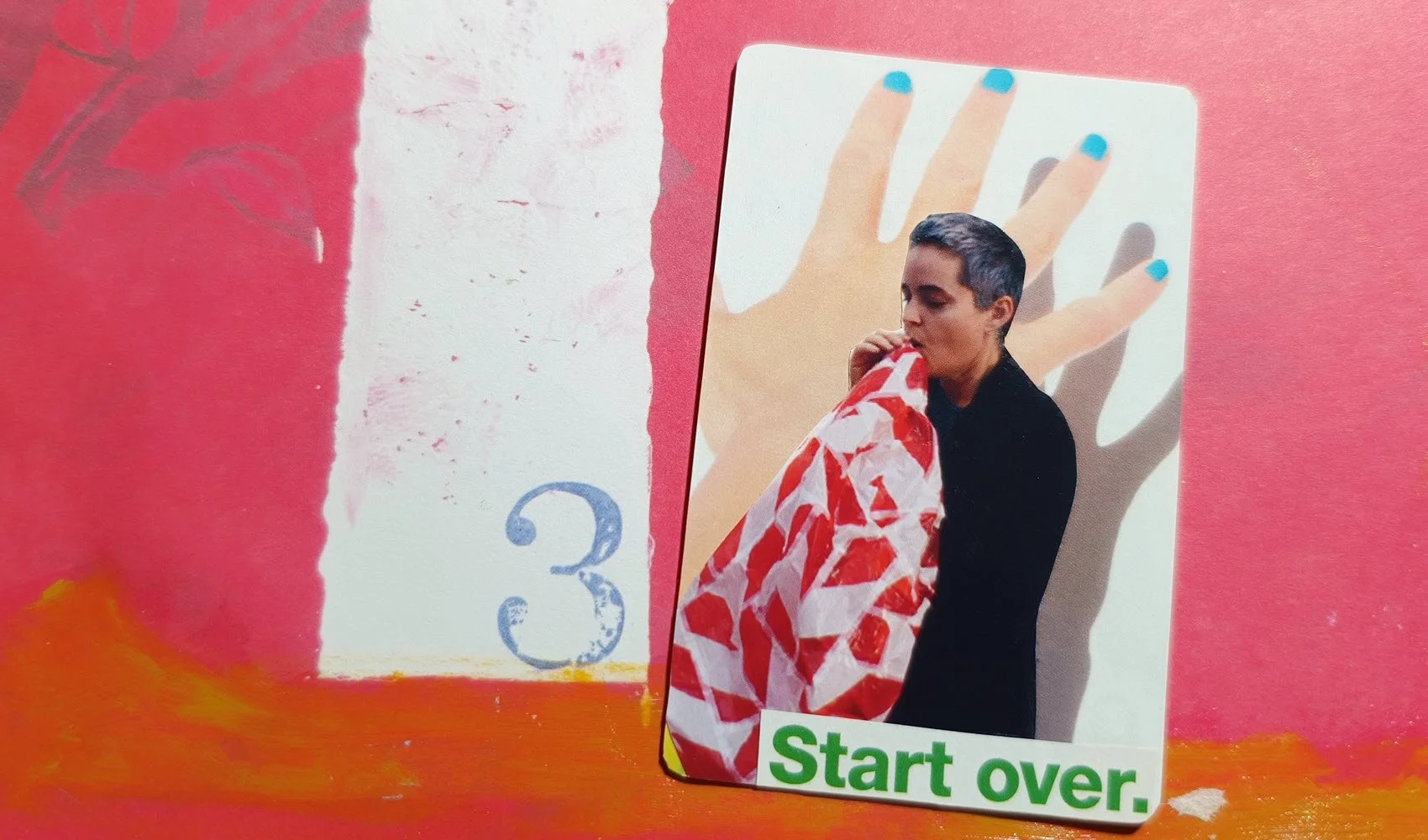
Re-launching your practice after a hiatus
It’s normal for a practice to fluctuate, alongside the ebb and flow of life.
If you have stopped your practice for a considerable time, don’t berate yourself and make the re-launch easy.
If you used a notebook, sketchbook or journal: do not start a new one!
You’ll end up with a stack of half-filled notebooks which is extremely dissatisfying, a bit wasteful and only reminds us of the times we fell off the wagon – I speak from experience! Simply turn the page, write today’s date and start again.
Picking up where you left off is also an opportunity to look through the last few pages you filled before you’ve stopped. You might discover that a few things you reflected on moved along while your practice was on hold. Choices were made, relationships shifted, actions were taken, new habits got established.
Noticing progress and change is very motivating and gets easily lost if we always start on a blank page.
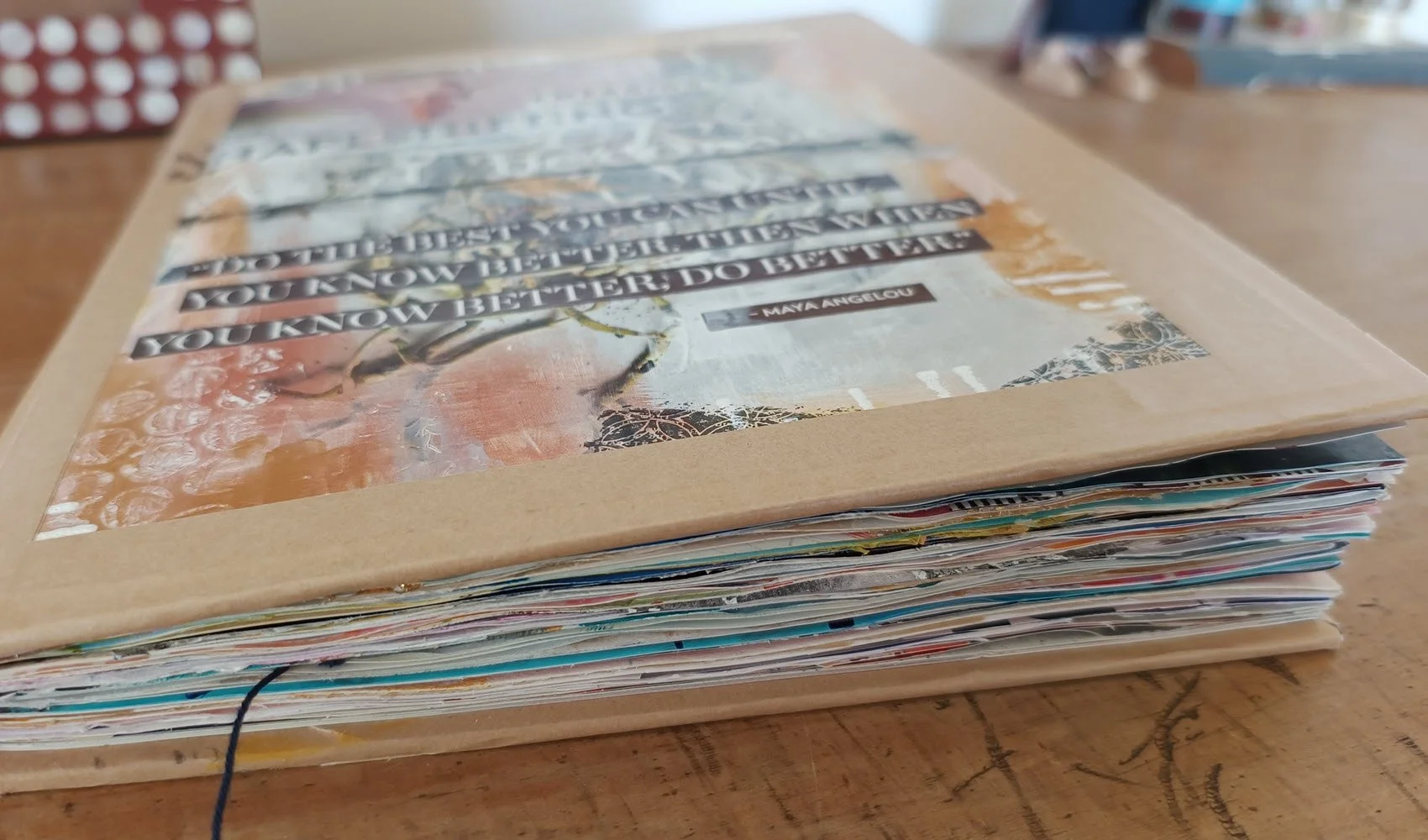
Spend some time examining the reasons for your hiatus.
Some reasons are perfectly acceptable: ill health, huge life curveballs that demanded all your attention and energy, a season of grief… You might decide, in hindsight, that keeping your practice would have been really supportive during this tricky time. Then your task is to find ways of making your practice easier, so that you can keep going with a version of it that is gentle, compassionate and supportive when times get tough.
Maybe your reasons for stopping were more mundane; life got busy (when isn’t it?). Or you got a bit bored. Take the re-launch as an opportunity to re-design your practice. Bring in more variety or simplify it. Have ease-ful versions of your practice lined up for the next busy period.
If you stopped because you didn’t get much out of it then that’s worth exploring as well. Some people find that they prefer looking forward rather than looking back. If that’s your natural stance, remember that reflective practice can be used to reflect forward, to imagine new possibilities and make decisions. It’s ok to embrace that preference.
A supportive reflective practice also helps us practice looking back over events, choices and experiences without moving into regret, resentment or rumination. Instead, we can look back with curiosity. Of course we can’t change the past, but we can learn from it.
However, as philosopher and educator John Dewey said:
“We do not learn from experience; we learn from reflecting on experience.”
If you want a regular reflective practice as a companion in your life, remember:
Start small, upgrade later.
Make it too easy to fail.
Make it as varied or as simple as you want it to be.
Use the mood you’re in and bring it to the page.
Do not start a new journal or sketchbook after a hiatus. Simply turn the page.
This is part 3, the final part of my series on consistency.
In part 1 of this series, I’ll invited you to define what consistency means for you.
In part 2, we explored the four conditions for consistency.
If you yearn for more consistency in your life and want to show up for yourself and for what matters to you, let’s chat.
I offer arts-based and trauma-informed coaching in a 1-on-1 setting: book a free Discovery Call or find out more here.
If you’re curious about building a reflective practice that you can stick with, check out my group programs: get in touch or look at current programs.