Build ease into your life
I remember the summer I learned to sew. I was in my teens and spent my entire summer holidays sewing trousers, skirts, and shirts alongside my mother.
When sewing a garment, ease determines the wiggle room needed for comfort and movement. Ease ensures you end up with an item of clothing that allows you to sit, move and breathe. Depending on fabric, design and style, there are straightforward formulas to calculate the right amount of ease. But ease is also about personal preference.
Knowing how much ease to apply to your sewing pattern can become a gamechanger in making clothes that not only fit but that you love wearing.
I haven’t sewn a garment in decades, but the importance of getting ease right has stayed with me; and I can finally admit to myself that I tend to prefer lots of positive ease, i.e. room to move, in my clothes and in my life.
Understanding how much ease you need in your life can be a turning point.
Rather than persisting with tight and meticulously scheduled routines, which you start with enthusiasm but struggle to keep up, try exploring how much ease you need to build into any form of routine or practice.
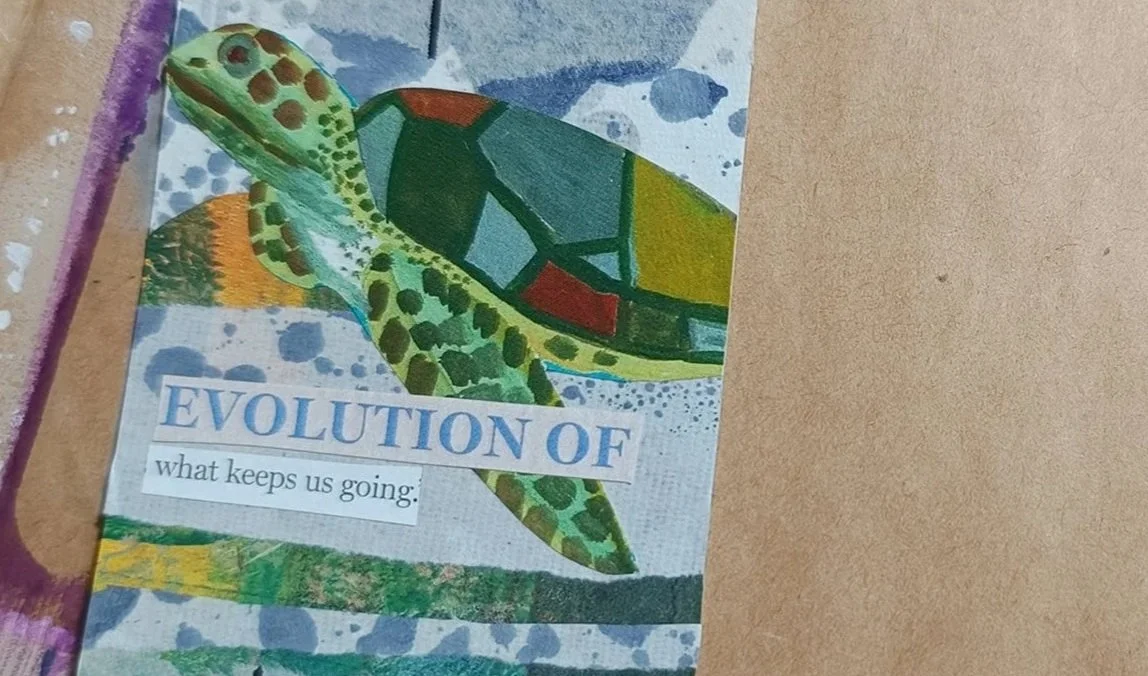
Cultivating an ongoing practice with ease
People yearn for more creativity in their lives.
Creativity gives us opportunities to be playful, focused, curious and inquisitive. We want to get out of our heads and into our bodies, and use our hands and senses more. But it’s not always clear how to go about it.
People want to be reflective (and reflexive) rather than reactive.
A reflective practice is a way of steadying ourselves as we adjust to seismic shifts and ruptures in the world and its systems and, on a smaller and everyday scale, navigate the unpredictable course of our own lives.
In our bones, we hope, or maybe even know, that having a regular practice, having a way of examining and aligning our outer lives with our inner worlds would do us good. People share with me that having a consistent reflective/ creative practice is a way of dipping regularly into joy. Still, they find it quite hard to build something sustainable and to keep going with it.
So, let’s build ease into the practice: wiggle room so that you can move and breathe in your practice.
Just like we look for a tiny stool in the changing room to see whether we can actually comfortably sit and breathe in these pants, we want to shape a version of our practice that’s possible when we wake up with zero capacity, energy or willpower or when our day goes steeply downhill straight after coffee.
In my group programs, we discuss the concept of a tiny practice. I encourage people to notice the processes they really love and find easy. Or the ones that typically elicit good insights, because we’re all motivated by the probability of useful outcomes. We discuss ‘stacking’ our reflective process by combining it with things we already do – the regular walk, our yoga practice, tending the garden, choosing a word for the year, pausing briefly on a Friday afternoon before we shift into weekend mode, existing creative hobbies.
We discuss that any practice needs to be given the time and attention we give to other things, many of them less beneficial for us.
We need to plan for having a practice that’s alive and keeps moving with us.
It doesn’t happen by chance, and I haven’t found any shortcuts.
Building ease into your practice doesn’t make it easy.
But it makes it more possible.
“What you choose to pay attention to is the stuff your life and work will be made of.”
Ease in longer-term commitments
I’m 12 days into my 100 Day project for 2026.
I’m doing it for the seventh year! (Of course, I didn’t get to Day #100 each time.)
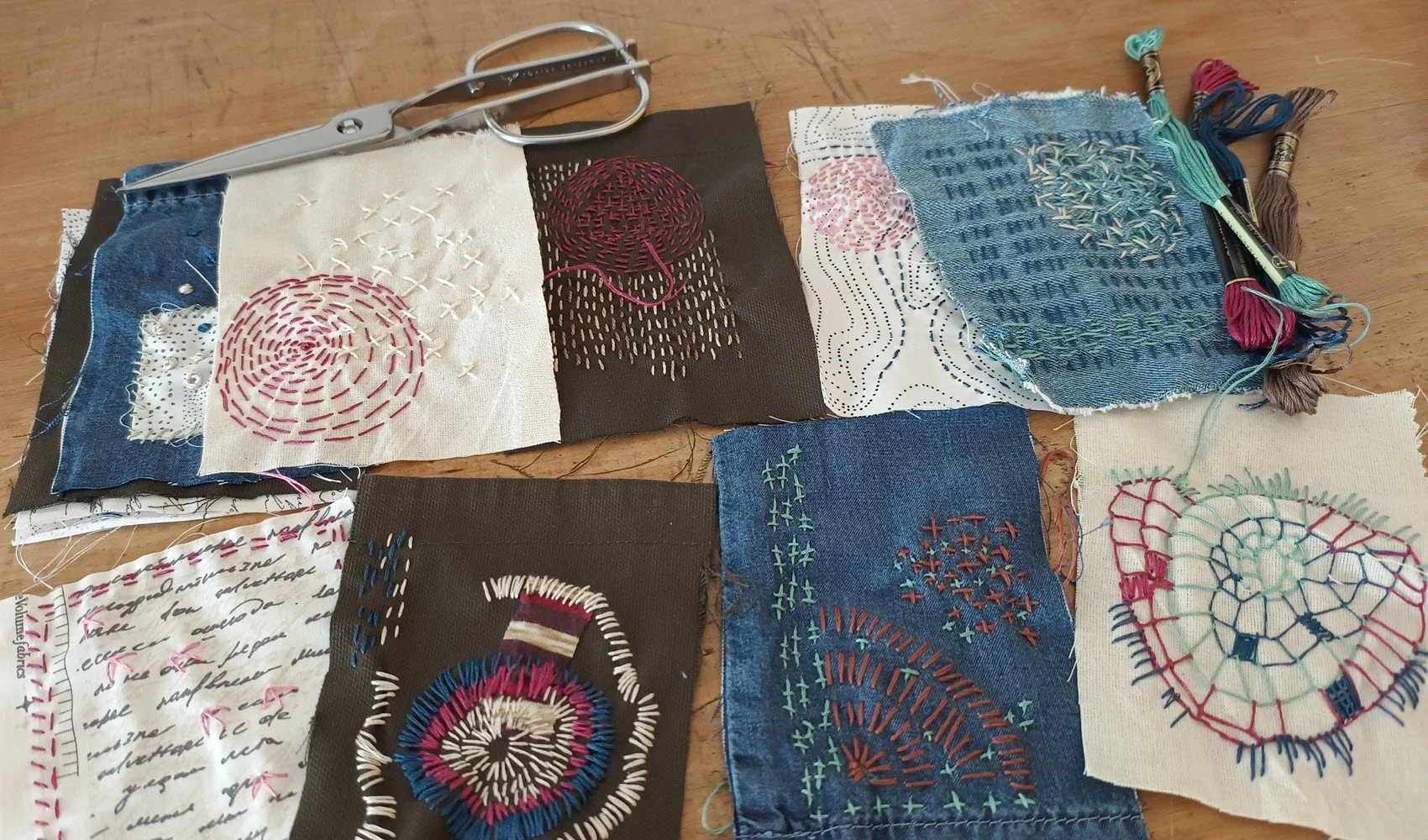
When it comes to committing to something for 100 days, bumping into patterns around stop-start, all-or-nothing and why-bother is inevitable. At the very least we’ll hear a voice from our childhood that says, ‘If it’s worth doing, it’s worth doing well’, just that ‘well’ has somehow and without us noticing morphed into ‘perfectly’. So, we set the bar high and begin.
And that’s fine as long as we have built ease into our project. Remember: it’s great if the pants fit when you stand up straight; it’s even better if they still fit when you sit down or have a belly full of cake.
Building ease into any longer-term commitment means to pre-negotiate with yourself how you intend to keep going on days with little capacity, energy, time, willpower, inspiration, desire, or motivation.
In previous years, my attempts to build ease into my 100 Day projects showed room for improvement. I gave myself a vague and generic permission to skip a day or do a little less. We tend to think that this sort of flexibility and openness is lovely and generous, but I actually found it harder to work with, because it was a slippery slope to quitting.
So yes, there can be too much ease, I guess. Too much ease is when well-defined and considered flexibility becomes so loose that we feel lost.
Hence, this year I’ve been very specific about building ease into my project. My ease for my 2026 100 Day project is three minutes. On the why-the-hell-do-I-bother-days, I will sit down and spend three minutes with my project. Twenty years in the corporate world have made me loathe the SMART goal mantra, but I admittedly do like that three minutes are specific, measurable and quite achievable, and it’s an entirely arbitrary figure I plucked from thin air.
There’s no point hoping that you’ll negotiate effectively with yourself on the low-capacity days. You give yourself a much better chance to keep going if you embrace the ebb and flow of life and have a plan for when the tide’s out.
“You have to pay attention to the rhythms and cycles of your creative output and learn to be patient in the off-seasons. You have to give yourself time to change and observe your own patterns.”
If you want to design ease into your work and life, let’s chat.
If you tend to feel lost or wobbly without a more rigid structure it’s worth exploring which parts or patterns are at the root of this. If you want to explore trauma-informed coaching in a 1-on-1 setting, book a free Discovery Call or find out more here.
If you’re curious about my group programs get in touch or look at current programs.
Book recommendation:
Austin Kleon’s book Keep Going remains one of my favourite books on the topic of consistency and practice. It’s small, super-easy to read and full of found poems – what’s not to love!