Savouring – practical nourishment for the soul: can savouring save our sanity?
We’re caught in a current of news, mostly distressing updates about wars and division, violence, poverty and collapsing systems. Each one of us will be confronted with something that is close to the bone, close to what we have experienced, known and sensed, struggled with and got scarred by.
Something that’s getting under my skin these days (among many other things) is seeing the millions of Epstein emails documenting how power has been brokered, seeing the very particular style of these emails as something I recognise from my past working life where it was (is?) used to uphold role power in corporate hierarchies, and then sitting with the ill feeling that little has changed.
It’s easy to list examples, just from today, or yesterday, to illustrate what it is we’re trying (but struggling) to process, digest, make sense of or respond to. We feel overwhelmed, enraged, hurt, despondent, and checking out or ignoring the news can feel like the last available strategy to stay sane. But we know that we would give up our agency and that we don’t want to hand over our world without resistance.
We refuse the playbook of being perpetually outraged and forced into numbness or disconnection.
Savouring the good moments is a way of resisting the onslaught of overwhelming stuff that we’re flooded with. Instead, savouring gets us into a state of safety and connection. It is in this state that we can choose our response, as Viktor Frankl put it.
“Between stimulus and response there is a space. In that space is our power to choose our response. In our response lies our growth and our freedom.”
A savouring practice helps us finetune our awareness and hone our ability to notice the micro-moments worth savouring. It’s a way of grabbing hold of the space Frankl described. With practice, we can widen and stretch this space so that we can’t miss it and therefore, we can’t miss the fact that we have agency over the response we want to choose.
I invite you to pause and think of a moment, today, or yesterday, that was truly joyful, all-round lovely and made you feel better, or even good about life? A moment that made you feel warm, fuzzy, connected, maybe you noticed yourself exhale, soften or feel even a bit teary?
Did you savour this moment, or did you rush through it?
I hope you savoured it, because savouring is a skill that can help us notice the glimmers in the dark.

If we can cultivate a savouring practice, we curate our own collection of good moments as an antidote to feeling overwhelmed and disconnected. It also helps us remember that it’s ok to feel (at least) momentarily good in a world that is broken, that we have permission for joy.
If the word ‘practice’ sounds like a lot of hard work, I promise you that this practice is really doable, even when we feel bone tired.
Savouring – a practical and doable nourishment for the soul: the 3 As of savouring: attend, appreciate and amplify
Attend: this is about catching the moment, no matter how brief or insignificant it might seem. You need to practice presence, stopping and noticing micro-moments that give you a sense of safety, connection, joy, hope, wonder or awe.
Appreciate: once you have noticed the moment, you need to turn toward it and allow yourself to take it in. Don’t dismiss the moment; don’t tell yourself you haven’t got time. Make a conscious choice to grasp and value this brief experience for what it is, no need to make it bigger or smaller.
Amplify: here you allow the moment to fill you, enter every fibre of your body and infuse your whole being. Fred Bryant, a social psychologist at Loyola University Chicago and father of the research on savouring describes it like this: “it is like swishing the experience around… in your mind.”
And here’s the good thing: research suggests that we spend max. 20-30 seconds on amplifying the moment.
If 20 seconds feels long for you, savour for only a few seconds, it could be five to begin with and slowly work your way towards the 20-30 second limit (or whatever your personal limit is).
When savouring stops feeling good, i.e. you’ve reached your personal time limit, we typically enter what’s called the dampening of the experience. Dampening shows up with disruptive thoughts.
These are some thoughts that could show up: I don’t deserve this experience, in general or given what’s happening in the world right now! How can I savour this moment when so many people are suffering? Savouring this moment is just another privileged experience. And there will be many variations of these sorts of thoughts…
It’s normal to feel the urge to tighten our armour in the face of suffering and respond with denial or avoidance – out of fear that facing the pain might bring us to our knees and we won’t be able to get back up. When we tighten our armour, we also shut out the moments worthy of savouring. We cancel joy, play, wonder or awe and refuse ourselves the right to imagine new possibilities, an exciting, joyful or hopeful future.
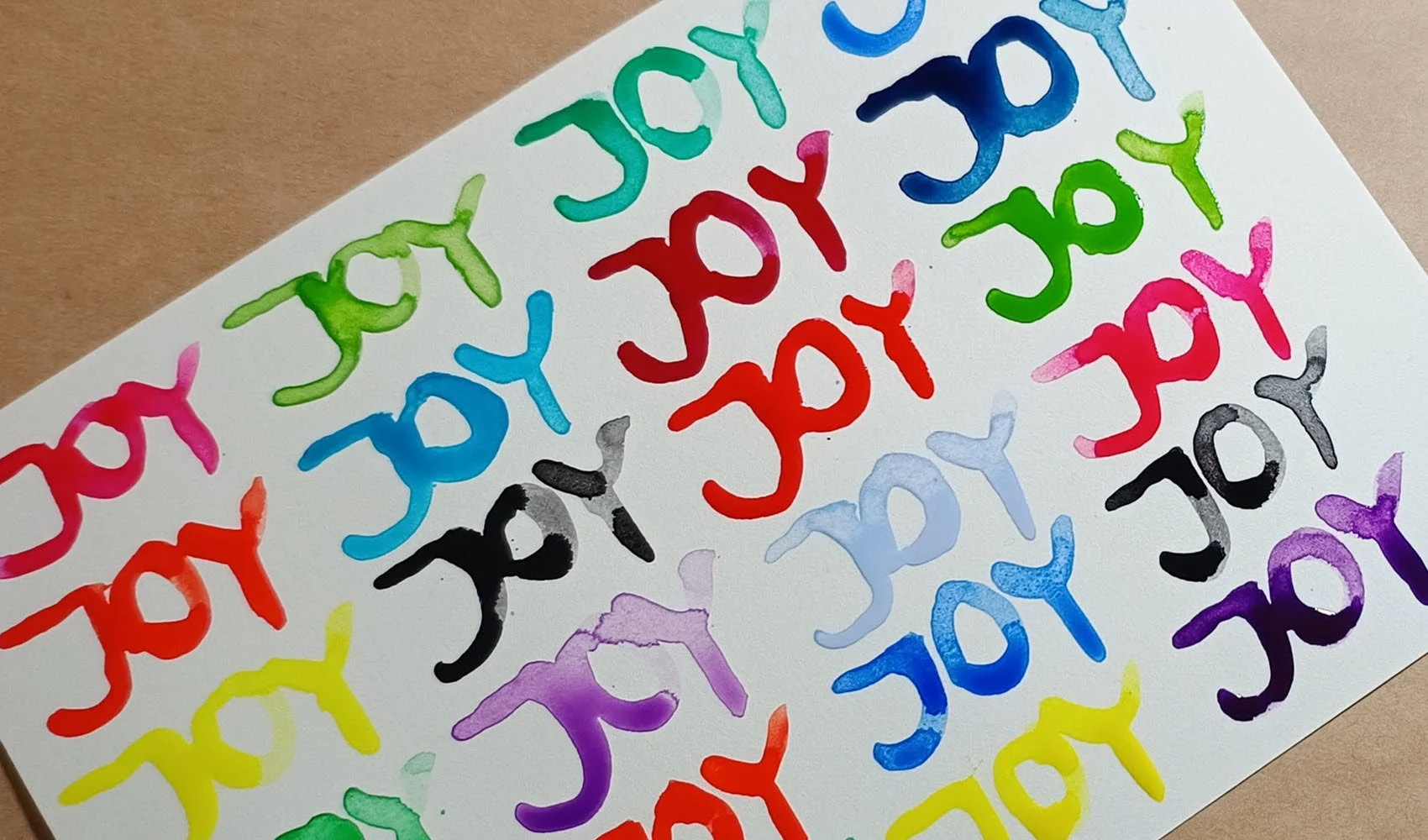
Savouring past, present and future moments
When you develop a savouring practice, you can initially experiment with savouring past moments. Gratitude or joy journals can be one way of developing a savouring practice that begins with looking back over your day. It also beats our inherent negativity bias.
As you hone your noticing skills, you can focus on savouring the present. Remember that a few seconds of savouring is enough and it won’t disrupt whatever you’re doing. It’s the briefest of intermissions but it can lift your spirits well beyond that pause and reconnect you with your agency.
And as you get even more practiced, you begin to anticipate savouring future moments.
When it comes to anticipating savouring moments, I found it easier to start with anticipating sensory experiences: the first sip of coffee in the morning – the taste and smell are so familiar, my hands know what it feels like to hold the warm mug. It’s a daily experience and I can easily anticipate savouring it. For you it might be tea, a warm bath, pulling your favourite jumper over your head, stepping onto your porch in the morning, opening your journal, walking by the sea, hugging a loved one, greeting your pet…
Each of these experiences comes with a rich set of sensory input. The smell of salty air, the freshness of a new morning, the fragrance of your favourite bath salts, the warmth of water, hearing the crack of your journal spine and rustling of paper as you leaf through the pages, touching another living being.
Remember:
A savouring practice isn’t designed to be done for more than 20-30 seconds.
Tune into what feels good and run with that.
Meet your nervous system where it is.
Know that its capacity can change daily, depending on what else is going on in your life and in the world.
If you want to explore trauma-informed coaching in a 1-on-1 setting, book a free Discovery Call or find out more here.
If you’re curious about my group programs get in touch or look at current programs.